Tiskane izdaje

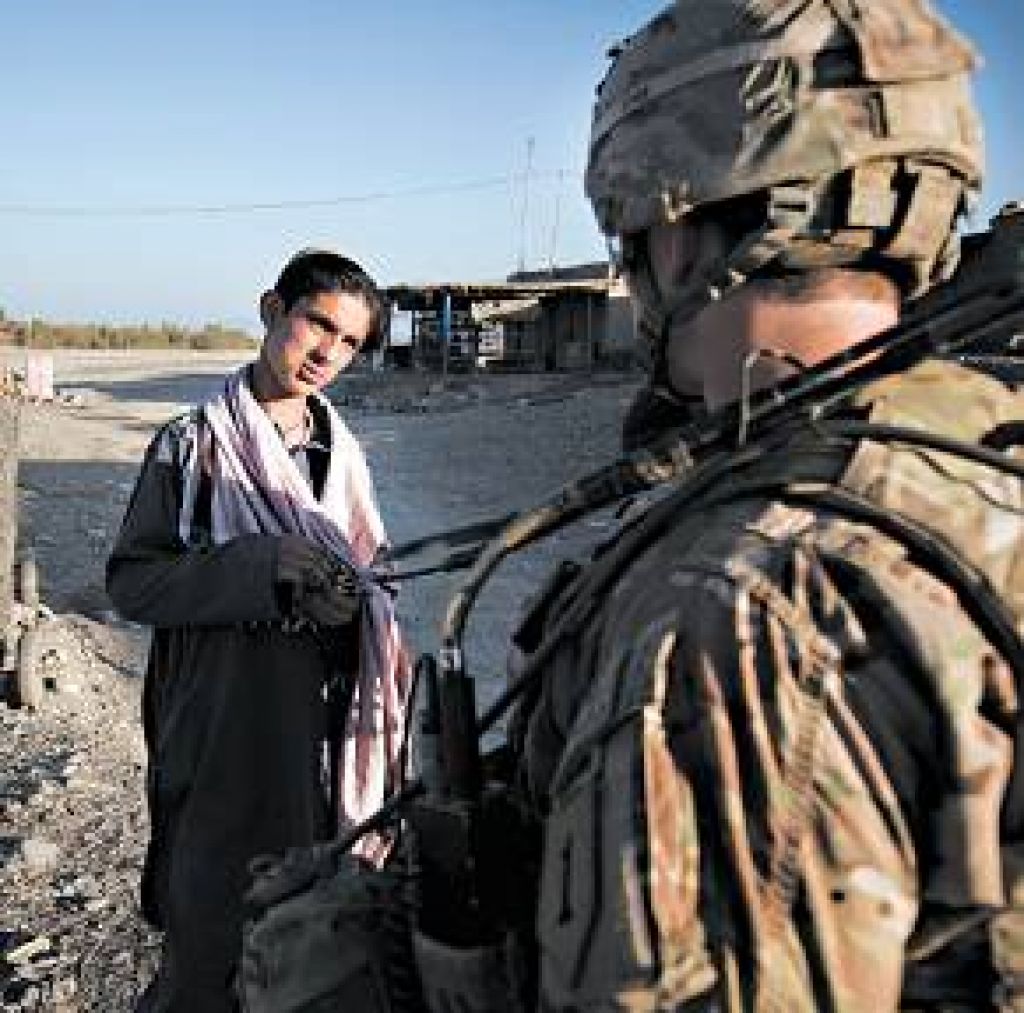


SABARI, Afghanistan - As targeted killings have risen sharply across Afghanistan, American and Afghan officials believe that many are the work of counterintelligence units of the Haqqani militant network and Al Qaeda, charged with killing suspected informants and terrorizing the populace on both sides of the Afghanistan-Pakistan border.
Military intelligence officials say that the units essentially act as death squads and that one of them, a large group known as the Khurasan that operates primarily in Pakistan's tribal areas, has been responsible for at least 250 assassinations and executions. Another group, whose name is not known, works mainly in Afghanistan and may be responsible for at least 20 killings in Khost Province over the summer, including a mass beheading that came to light only after a video was found in the possession of a captured insurgent. The video shows 10 headless bodies along a road, while their heads sit nearby, their faces clearly visible.
It is another indication that the Haqqanis, a mostly Pakistan-based faction, remain the most dangerous part of an insurgency that makes full use of an often ill-defined border, as the NATO strike that killed 24 Pakistani soldiers last month showed.
The Americans have geared their offensive around bloodying the insurgents as they enter Afghanistan. But the new wave of assassinations shows that, even as NATO portrays the insurgents as a weakening force, the Haqqanis can assert their influence, not only with headline-grabbing bombings but also through intimidation and by controlling perceptions.
One chilling case attributed to the second death squad came after American forces captured the senior Afghanistan-based leader for the Haqqanis, Hajji Mali Khan, and killed his top deputy this summer. Days later, the bodies of two men accused of helping the Americans were found near the village where Mr. Khan was captured. Scalding iron rods had been shoved through their legs. One victim had been disemboweled, and both had been shot through the head and crushed by boulders, terrifying villagers.
Across Afghanistan, assassinations have jumped 61 percent, to 131 reported killings, through the first nine months of this year, compared with the same period in 2010, accord-ing to NATO. United Nations officials say they began noticing a sharp increase in 2010, with 462 assassinations according to their records, double the number from the previous year. The figures may not include many killings in remote areas.
The Khurasan is believed to have formed in 2009 in the North Waziristan area of Pakistan, the Haqqanis' headquarters, in response to intensified drone attacks by the United States. The group works closely with Al Qaeda. Estimates of its size range from 100 to 2,000 members.
In places like Sabari, a district about 20 kilometers from the Pakistan border, the killings are producing their intended effect. After a daylight execution of three men in the village of Maktab about four months ago, shop owners were so traumatized that they never reported the killings.
Of ten, the victims may have had little more than passing encounters with coalition forces, or no involvement at all, according to officials, witnesses, and friends and relatives of victims.
American and Afghan officials learned about the killings when a video of the episode was found on a captured insurgent's cellphone.
The video showed several gunmen shooting two men as shop owners scrambled for cover. The militants then shot a third man as he sat in front of his shop. As he fell, one of the gun-men shot him 10 more times in the face and chest.
"Whoever tries to help the Americans and spies for them will face this," one of the men shouted after the killings, according to a witness, Ahmadullah, 25, a shop owner who like many Afghans goes by one name.
Ahmadullah said no one dared report it . "We just had to watch and stand quiet and watch what was happening to these poor people," he said.
Zabit Amen Jan, a former Musa Khel resident, has lost four brothers to insurgents, including two students in their 20s whose bullet-ridden bodies were found in June. A letter said the men had ignored repeated warnings to stop working with the coalition forces.
Mr. Jan said his brothers had no connection to the coalition.
"People used to come to our district for picnics because our area is full of mountains and covered with pine and walnut trees," he said. "Now people are fleeing to Khost City or Kabul or Pakistan, because there are so many killings and they know the government can't protect them."