Tiskane izdaje



Many insects, frogs, snakes, jellyfish and other phyletic characters use venoms and repellents. Mammals generally rely on teeth, claws, muscles or quick wits. But the rare mammal has discovered the wonders of chemistry.
The African crested rat - large, furred and helmeted - is one such creature. It permeates its specialized pelt with potent toxins harvested from trees, as a recent report in the journal Proceedings of the Royal Society B shows, deterring predators with chemical weapons.
Skunks and zorilles mimic the sulfurous stink of a swamp. The male duckbilled platypus infuses its heel spurs with a cobralike poison. The hedgehog sharpens the sting of its spines with a venom chewed off the back of a Bufo toad.
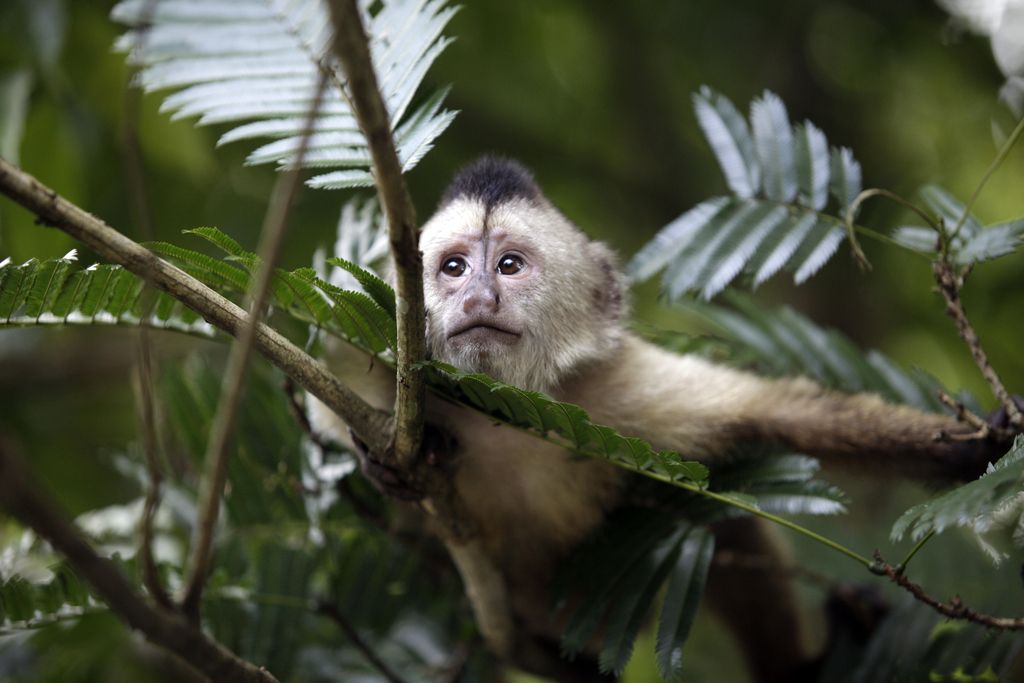
And there's more: capuchin monkeys ward off pests with extracts gathered from millipedes and ants, while blacktailed deer rub themselves liberally with potent antimicrobial secretions produced by glands in their hooves.
William Wood, a chemistry professor at Humboldt State University in California, said these secretions are effective against an array of micro-organisms, including acne bacteria and athlete'sfoot fungus.
For each newly identified chemical fix, researchers seek to identify its benefits, drawbacks and evolution, and to compare it with other known cases of chemical arms. Distinctive themes have emerged.
For example, whereas poisonous insects tend to advertise their unpalatability with bright colors, most mammals and their mammalian predators, which are nocturnal or crepuscular, use strong contrast between dark and light.
This is why skunks, zorilles (also called polecats) and the African crested rat employ black against white. The pattern is visible in very low light, and its message is too: I'm noxious.
In a paper on the African crested rat, Fritz Vollrath of Oxford University and his colleagues described its special traits.
The rat spends hours gnawing on the bark and roots of the Acokanthera tree, from which it extracts the same heart toxin that African hunters have traditionally used to kill elephants. The rat then slavers the poison onto specialized hairs along its flank.
Each outer shaft is stiff and full of holes, and inside are long, fluffy microfibers. The team showed that the applied
toxin seeps through the holes and is wicked up and stored by the fibers. One bite can kill a predator.
The researchers don't know why the rat is immune to the toxin, or how its fate came to be bound up with the Acokanthera tree.
"The rat eats a lot of things that other animals won't," Dr. Vollrath said. "If it eats something disgusting, it tries to spit it out, clean it off, using its skin as a napkin."
So an early crested rat, gagging on a toxic tree, may incidentally have ended up protected against predation. Through evolution, the creature now depends on tree toxin for protection. Should that tree go extinct, the rat would follow. Skunks synthesize their own toxins. Through anal scent glands at the base of the tail, they generate a noxious spray.
At the heart of skunk spray is a thiol, the hallmark of nasty places high in lethal hydrogen sulfide and low in oxygen - like mines and swamps. "Our nose is able to detect thiols at extremely low levels," Dr. Wood said. "We needed to stay away from areas with low oxygen, where we could die."
Skunks, he added, "have come along and capitalized on this." To deter a predator chasing at an unknown distance, the skunk goes for the mist effect; if the harasser is within view, the skunk may choose a stream to the face.
The monkey is another creature willing to withstand extremely irritating chemicals to rebuff bloodsucking parasites. "Capuchin monkeys are notoriously generalist and destructive in their sampling," said Jessica Lynch Alfaro, the associate director of the Institute for Society and Genetics at the University of California, Los Angeles. "You have to watch out or they'll drop branches on your head."
They tear up chili peppers to release the capsaicin, rip apart millipedes to procure a few droplets of searing benzoquinones. And they'll roll around on a nest of carpenter ants to soak up the ants' formidable formic acid.
"Capuchin monkeys get very agitated when they're anointing themselves," said Dr. Lynch Alfaro. "But they're keeping off parasites, and they seem to have a high threshold for pain."
Besides, anointing is a social affair. "They get into such a frenzy that the social order breaks down; everyone is anointing with everyone else," she said. "It's like a big, wild party."