Tiskane izdaje



WARSAW - For all that Poland has accomplished since the fall of the Iron Curtain, it has long resisted fully coming to terms with its Communist past - the oppression, the spying, even the massacres.
Society preferred to forget, to move on. But now Poland and many of its neighbors in Central and Eastern Europe have decided the time is right to deal with the unfinished business. Suddenly there is a wave of accounting in the form of government actions and cultural explorations,
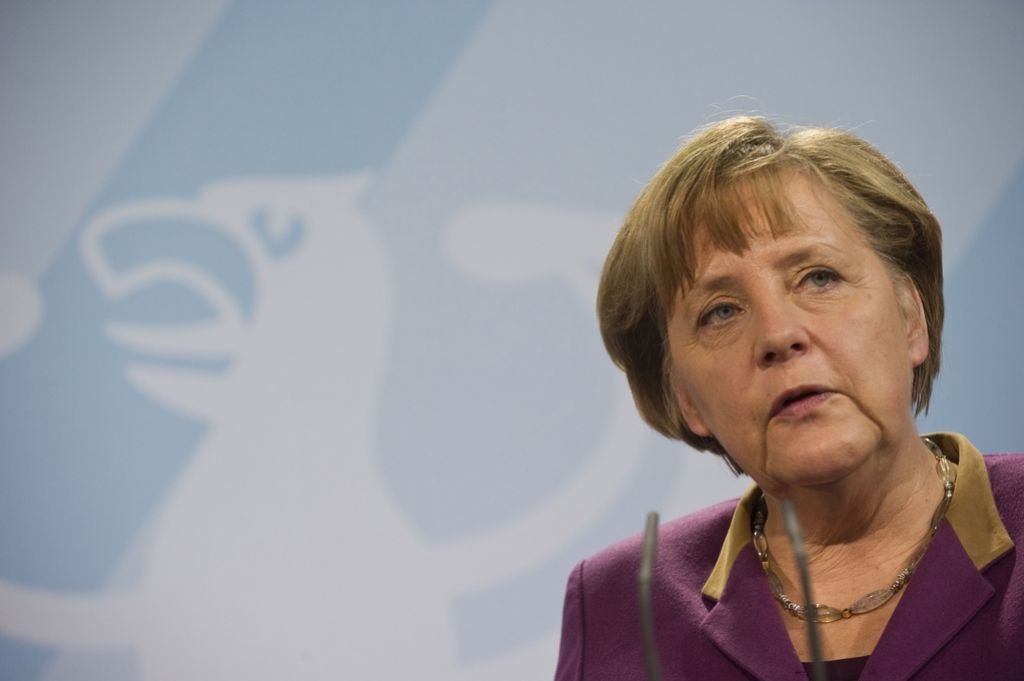
On February 19, Chancellor Angela Merkel of Germany nominated as the next president a former pastor and East German activist, Joachim Gauck, who turned the files of the Ministry for State Security - better known as the Stasi -
into a permanent archive.
"In order to defend ourselves in the future against other totalitarian regimes, we have to understand how they worked in the past, like a vaccine," said Lukasz Kaminski, the president of Poland's Institute of National Remembrance.
Reconciling with the past is an issue that has hovered over post-Communist Europe for decades. But today that experience has broader global resonance, serving as a point of discussion across the Arab world where revolts have cast off long-serving dictators, raising similarly uncomfortable questions about individual complicity in autocratic regimes.
In Poland, nearly one million people have watched Antoni Krauze's "Black Thursday," a film exploring an episode in 1970 when government troops gunned down dozens of protesters in Gdynia and other cities on Poland's Baltic Coast. It took Mr. Krauze four decades to make the film. First he was wary of Communist censors and then stymied by public apathy. The movie was a hit last year precisely because of the unsettling subject matter: unarmed protesters and innocent bystanders are shot in the streets or sadistically beaten in police stations.
"In the beginning of the '90s, people thought it wasn't right to go back to those times," said Mr. Krauze, 72. Poland is dealing with its past on multiple fronts. After years of legal action, the court that ruled on the Communist leaders from 1981, when martial law was imposed, gave just a two-year suspended sentence to the interior minister at the time, General Czeslaw Kiszczak. General Wojciech Jaruzelski, the former Communist leader of Poland who declared martial law, was found medically unfit to stand trial.
During the recent demonstrations in Romania, signs and chants by protesters in Bucharest equated the increasingly unpopular, and critics say ever more authoritarian, President Traian Basescu with the deposed dictator Nicolae Ceausescu.
In Germany, domestic intelligence agents have been observing dozens of members of Parliament from the Left Party, which includes elements of the for unfit to stand trial.
During the recent demonstrations in Romania, signs and chants by protesters in Bucharest equated the increasingly
unpopular, and critics say ever more authoritarian, President Traian Basescu with the deposed dictator Nicolae Ceausescu.
In Germany, domestic intelligence agents have been observing dozens of members of Parliament from the Left
Party, which includes elements of the former East Germany's governing Socialist Unity Party. "That they are seriously still doing this in the year 2012, that really floored me," said Gregor Gysi, head of the Left Party parliamentary group and one of the politicians being watched. "They still think in the categories of the cold war."
In most cases these revolutions were not complete overthrows. The Communist authorities stepped aside, but with conditions. In Poland the return of the post-Communists came even more quickly than in Hungary, with the Democratic Left Alliance winning in 1993, reinforcing cleavages in Polish society between those ready to move on and those who could not.
"I expected some kind of Nuremberg for Communism," said Tadeusz Pluzanski, whose father was tortured by the Communist secret police. "There was no revolution," he said, "just this transformation process."
The Institute of National Remembrance in Poland has hosted conferences and symposia and worked with teachers on lesson plans, as well as publishing more than 800 titles about the Nazi occupation and the Communist period. The institute also helped support Mr. Krauze's film.
When Mr. Krauze began filming in Gdynia in 2010, he found that the support for the project ran deep in the local population, with volunteers spontaneously pitching in to shovel snow, local government officials clearing the way with permits and businesses waiving location fees. "You could clearly see people wanted this story told," Mr. Krauze said.