Tiskane izdaje

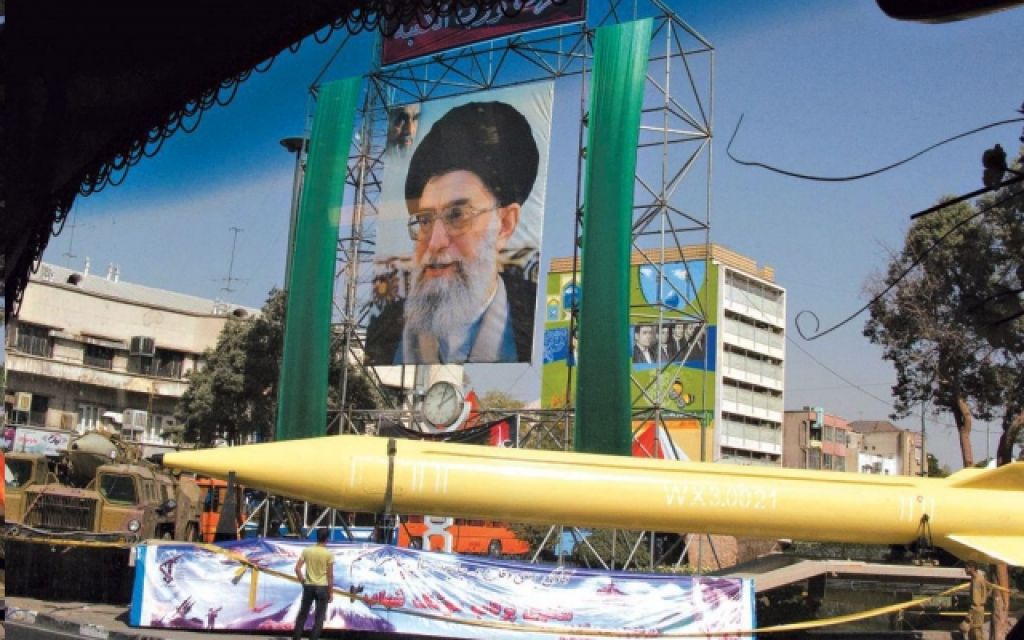


But think of the multipolar chess President Obama is now playing. Everycountry involved in the dispute over Iran's possibly acquiring nuclear weapons is calculating how the American presidential election plays to its agenda.
The politics of soaring oil prices loom over any threat of military conflict, even a brief skirmish in the Strait of Hormuz. And with global economic turmoil a reality and leadership changes possible or certain this year in the United States, Russia, China and France, the game gets even more complex. Start with the Iranians.
They have studied China's example - President Lyndon B. Johnson was urged by American hawks in the 1960s to launch a military strike against China. And the case of Pakistan, which faced severe economic sanctions - urged
foremost by the United States - for its pursuit of the bomb. But in both cases, once those countries conducted a test, the world adjusted to the new reality.
Less than a half century later, China is the world's second largest economy, and no one messes with it. As soon as the September 11 attacks happened, the sanctions against Pakistan disappeared; suddenly the United States cared about cooperation in hunting down Al Qaeda.
"From the perception of the Iranians, life may look better on the other side of the mushroom cloud," said Ray Takeyh, a senior fellow at the Council on Foreign Relations. He may be right: while the Obama administration has vowed that it will never tolerate Iran as a nuclear weapons state, a few officials admit that they may have to settle for
a "nuclear capable" Iran that has the technology, the nuclear fuel and the expertise to become a nuclear power at any time.
No one can get inside the head of Iran's supreme leader, Ayatollah Ali Khamenei, but Mr. Takeyh notes that his pattern of behavior over the past decade has been to push the nuclear program ahead "systematically but cautiously," but until now avoiding major crises.
Several years ago the Western allies said Iran could not resume enriching uranium; it resumed. Then the "red line" was drawn around enriching at a much higher level of purity, which gets Iran closer to bomb-grade fuel. But Iran has been doing that for nearly two years now. And the latest violation was beginning production in a deep underground facility that is far less vulnerable to bombing.
That moves the calculus to Israel. It used to declare that it would never permit Iran to go past "the point of no return," an ill-defined line beyond which Iran could rapidly produce a bomb. There's continuing debate about where that line is, but former Israeli intelligence officials say Iran is long past it. Yet, so far, Prime Minister Benjamin Netanyahu has been constrained by the United States, which argues that cyberattacks, sabotage and sanctions have been more effective at slowing Iran's program, without an international furor.
The Iranians know they have little to gain from a confrontation that spins out of control. But threats, small attacks on refineries and harassment of shipping can send the price of oil soaring, with economic effects no leader wants in
election season.
Instability scares the Chinese, too, but gives the Russians an opportunity. For years China resisted sanctions on Iran, since it buys so much Iranian oil.
Now it sees that escalating sanctions are inevitable, so it is busy looking for alternative sources.
Russia is looking to buy time, but, as a significant oil producer, it benefits from a sustained crisis - as long as it
stays at a low boil. The Russians have proposed a lengthy negotiating plan with Iran, one that would take years to
complete.
And then there are the Europeans and the Arab states. During the Bush administration they feared any tough sanctions, convinced that, if they failed, President Bush would order a strike on Iran.
Now, exactly three years into the Obama administration, the situation has reversed. Europe is finally as eager for sanctions as Washington has been; on January 23, the EU agreed to impose a phased ban on oil purchases from Iran.
The United States has not purchased oil from Iran for many years, but Mr. Obama has stopped short of advocating a global total embargo, which could lead to confrontations at sea.
The hard line taken by President Nicolas Sarkozy of France and Chancellor Angela Merkel of Germany has been the surprise in the latest chapter in the long-running Iranian nuclear crisis.
Their operating assumption is that if the economic cost is high enough, the supreme leader will fold. Few in Washington are persuaded, but most go along with the assumption because the more forceful alternatives are too unpleasant to contemplate.